
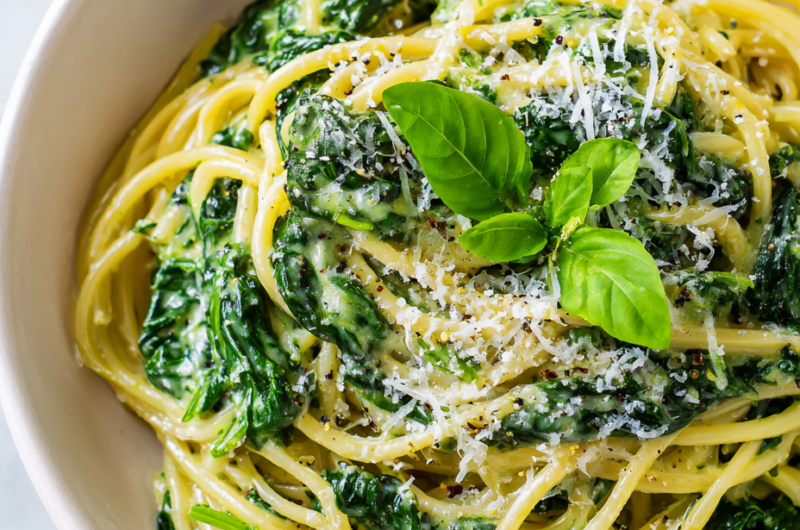
This creamy spinach pasta isn’t about fancy ingredients or perfect technique; it’s about understanding that balance between richness and greens. I’ve learned that timing and heat control make or break this dish, especially when you want the spinach to stay vibrant and slightly wilted, not mushy.
Cooking this recipe feels like a small act of rebellion against the overly processed, overly complicated dishes we’re often sold. It’s straightforward, honest, and really satisfying when you get those silky, bright green streaks of spinach mixed into the creamy sauce. Plus, it’s perfect for those nights when you want comfort but still crave a bit of freshness on your plate.
Focusing on the forgotten art of balancing creamy sauces with the subtle bitterness of fresh spinach, this recipe emphasizes the importance of timing and temperature to achieve a perfectly silky texture without overcooking the greens.
The inspiration behind this dish
- This recipe was born out of a quiet afternoon in the kitchen, where I found myself craving something both comforting and bright. I had a bag of fresh spinach that needed using, and I wanted to make a sauce that showcased its subtle bitterness without overpowering the creamy base. It’s a simple dish, but one that felt like a small victory to perfect, balancing richness with freshness.
- I remember the first time I added a splash of lemon to the sauce, and how it instantly lifted the entire dish. Since then, it’s become my go-to for weeknights when I need something quick but satisfying. Over the years, I’ve tweaked the method, but the core idea remains: gentle heat, quick wilt, and a lot of taste testing.
- heading
- story_type
Ingredient breakdown
- Spinach: I love using fresh spinach because its bright, slightly bitter flavor really cuts through the cream. If you want a milder taste, try baby spinach; for more bite, go for mature leaves.
- Cream: Heavy cream makes it luxuriously silky, but if you’re dairy-free, coconut cream adds richness with a subtle coconut aroma—just watch the sweetness. Avoid low-fat options; they won’t give the same velvety texture.
- Garlic: I prefer finely minced garlic because it distributes evenly and releases that fragrant, almost nutty aroma early in cooking. For a milder punch, try roasting it first, which turns it sweet and mellow.
- Pasta: I usually go for spaghetti or linguine—those long strands soak up the sauce beautifully. When in a pinch, penne works well too, holding bits of spinach and garlic inside the tubes.
- Lemon: A splash of fresh lemon juice at the end brightens everything up and balances the richness. For a different twist, try lemon zest for a more intense citrus aroma, especially if your lemon is on the small side.
- Parmesan: I like freshly grated Parmesan for its sharp, nutty flavor and how it melts seamlessly into the sauce. Pecorino Romano is a good alternative if you want a saltier, more pungent kick.
- Olive Oil: Use good-quality extra virgin olive oil for sautéing; it adds a fruity depth. If you prefer a more neutral flavor, a light vegetable oil works without overpowering the other ingredients.
Spotlight on key ingredients
Spinach:
- I love using fresh spinach because its bright, slightly bitter flavor really cuts through the cream. If you want a milder taste, try baby spinach; for more bite, go for mature leaves.
- Cream: Heavy cream makes it luxuriously silky, but if you’re dairy-free, coconut cream adds richness with a subtle coconut aroma—just watch the sweetness. Avoid low-fat options; they won’t give the same velvety texture.
- Garlic: I prefer finely minced garlic because it distributes evenly and releases that fragrant, almost nutty aroma early in cooking. For a milder punch, try roasting it first, which turns it sweet and mellow.
Cream:
- I love its velvety smoothness and how it coats every strand of pasta. When heated, it transforms into a rich, slightly glossy sauce that clings beautifully.
- Spinach: Its tender leaves wilt quickly, turning a vibrant green. During cooking, it softens but still offers a slight chew, adding a fresh contrast to the creamy texture.
Notes for ingredient swaps
- Dairy-Free: Swap heavy cream for coconut cream. It adds richness but a subtle coconut aroma, so adjust accordingly.
- Vegan: Use cashew cream or blended silken tofu instead of dairy cream. Keeps it silky but changes the flavor slightly.
- Cheese Variations: Pecorino Romano or Grana Padano can replace Parmesan for a different sharpness and saltiness.
- Pasta Type: Whole wheat or gluten-free pasta work well, though they may alter the texture and cooking time slightly.
- Lemon: Lime juice offers a similar brightness with a slightly different citrus note. Zest can boost citrus aroma.
- Greens: Baby spinach is milder, while kale or Swiss chard can add more bitterness and texture. Adjust cooking time.
- Oil: Avocado oil gives a mild flavor and high smoke point, good if you want a subtle nutty undertone.
Equipment & Tools
- Large deep skillet: Cook pasta and sauté greens evenly
- Colander: Drain pasta efficiently
- Whisk: Combine cream and cheese smoothly
- Measuring cups and spoons: Ensure precise ingredient quantities
Step-by-step guide to creamy spinach pasta
- Equipment & Tools: Use a large, deep skillet for even heat and enough room to toss pasta and spinach. Have a colander ready for draining, a whisk for sauce, and a measuring cup for liquids.
- Boil water in a large pot, salt generously, and cook pasta until just shy of al dente, about 8 minutes at 100°C/212°F. Drain, reserving ½ cup pasta water.
- While pasta cooks, heat 2 tbsp olive oil over medium heat (about 160°C/320°F). Add 3 minced garlic cloves, cook until fragrant, about 30 seconds. Do not burn—reduce heat if needed.
- Add 4 cups fresh spinach in batches, sauté until just wilted, bright green, and tender, about 2 minutes. Remove from heat if spinach starts to brown.
- In the same pan, pour in 1 cup heavy cream, bring to a gentle simmer, about 2 minutes. Whisk in ½ cup grated Parmesan until melted and smooth.
- Stir in the cooked pasta, tossing to coat evenly. If sauce is too thick, add reserved pasta water a tablespoon at a time until silky and coats the pasta well.
- Finish with a squeeze of fresh lemon juice, about 1 tbsp, to brighten. Taste and adjust salt or pepper if needed.
- Rest pasta for 1 minute off heat. Plate immediately, garnished with extra Parmesan and a drizzle of olive oil if desired.
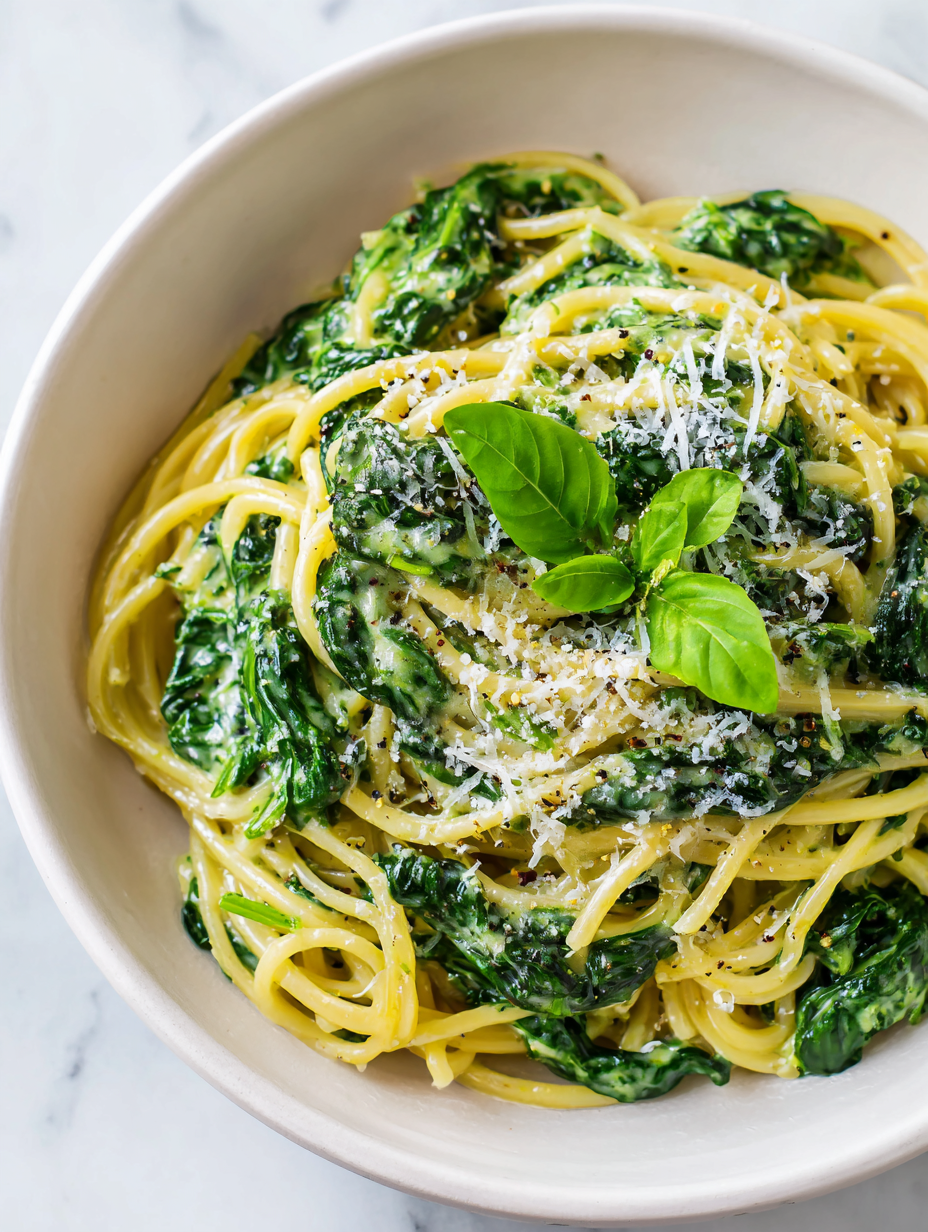
- Check the dish: Sauce should cling to the pasta, spinach vibrant, and aroma bright with garlic and lemon. The texture should be creamy but not greasy.
- Serve hot, enjoy the velvety sauce and tender greens. Best enjoyed fresh, but leftovers keep well in the fridge for up to 2 days.
Serve immediately while hot. Garnish with extra Parmesan and a drizzle of olive oil. Rest for 1 minute off heat to allow flavors to settle. Plate in warm bowls for best experience.
How to Know It’s Done
- Sauce is silky and coats the pasta evenly
- Spinach remains bright green and tender, not mushy
- Pasta is al dente with a slight bite
Creamy Spinach Pasta
Ingredients
Equipment
Method
- Bring a large pot of salted water to a boil and cook the pasta until just shy of al dente, about 8 minutes. Drain, reserving ½ cup of pasta water, and set aside.
- While the pasta cooks, heat the olive oil in a large deep skillet over medium heat until shimmering. Add the minced garlic and cook for about 30 seconds until fragrant, stirring constantly to prevent burning.
- Add the fresh spinach in batches, stirring until each batch is wilted and vibrant green, about 2 minutes per batch. Remove from heat once all the spinach is wilted but still bright.
- Pour in the heavy cream and bring to a gentle simmer, stirring with a whisk until the sauce is slightly thickened, about 2 minutes.
- Gradually add the grated Parmesan cheese, whisking continuously until melted and the sauce is smooth and glossy.
- Stir in the cooked pasta, tossing to coat evenly with the sauce. If the sauce feels too thick, add a splash of the reserved pasta water to loosen it and make it silky.
- Finish by squeezing in the lemon juice and adjusting seasoning with salt and pepper. Taste and add more lemon or seasoning if desired for brightness.
- Serve immediately, garnished with extra Parmesan if you like, and enjoy the bright, silky flavors of this simple dish.
Tips & Tricks for Perfect Creamy Spinach Pasta
- Bolded mini-head: Use fresh spinach for vibrant color and flavor, adding it in batches to prevent wilting too much.
- Bolded mini-head: Incorporate grated Parmesan gradually to melt smoothly into the sauce, avoiding clumps and graininess.
- Bolded mini-head: Cook garlic gently over medium heat until fragrant but not browned to avoid bitterness.
- Bolded mini-head: Reserve some pasta water before draining; it’s perfect for loosening the sauce if it thickens.
- Bolded mini-head: Finish with a squeeze of lemon to brighten the creamy richness and add a fresh note.
- Bolded mini-head: Toss pasta with sauce off heat to prevent breaking the cream and to keep the sauce silky.
- Bolded mini-head: Serve immediately while warm; the sauce thickens as it cools, losing its velvety texture.
Common mistakes and how to fix them
- FORGOT to stir spinach early → Sauté spinach promptly to avoid overcooking.
- DUMPED all pasta water at once → Reserve a little pasta water for sauce consistency.
- OVER-TORCHED garlic → Cook garlic gently until fragrant, not browned or burnt.
- UNDER-seasoned the sauce → Taste and adjust salt and pepper before serving.
Quick fixes and pantry swaps
- When sauce is too thick, splash in hot pasta water and stir until silky.
- If spinach looks wilted and dull, quickly refresh with a squeeze of lemon for brightness.
- Splash olive oil on pasta if it clumps together after draining; toss gently to separate.
- Patch overburned garlic by adding fresh, minced garlic at the end for aroma.
- Shield sauce from splitting by removing from heat before adding Parmesan—stir rapidly.
Prep, store, and reheat tips
- You can prep the garlic and spinach ahead; wash and chop spinach, mince garlic, and keep refrigerated for up to 1 day, preserving freshness and bright aroma.
- Cook the pasta until just shy of al dente, then drain and toss with a little oil to prevent sticking. Store in an airtight container for up to 24 hours; reheat in boiling water for a few seconds to loosen.
- Make the sauce up to 2 hours ahead; keep in a jar or airtight container in the fridge. The flavors will meld better after resting, but keep an eye out for separation—whisk before reheating.
- Reheating the sauce: warm gently over low heat, stirring often. Expect it to thicken slightly—add a splash of reserved pasta water or a little cream to loosen, and check seasoning.
- For leftovers, store in an airtight container in the fridge for 1–2 days. The sauce may darken slightly, and spinach can lose some of its vibrancy, but the dish remains tasty when reheated slowly.
Top questions about creamy spinach pasta
1. Can I use frozen spinach?
Fresh spinach will give you a brighter, more vibrant flavor and color. Frozen works but can be more watery and dull in appearance.
2. Should I thaw frozen spinach first?
Yes, warm the frozen spinach slightly to remove excess moisture before adding to the sauce, or it may water down the cream.
3. When should I add lemon juice?
Adding lemon juice brightens the creamy sauce and balances the richness of the cream and cheese. A squeeze right before serving is best.
4. How do I prevent garlic from burning?
Overcooking garlic releases bitter flavors and can ruin the sauce. Cook just until fragrant, about 30 seconds, over medium heat.
5. Why should I save pasta water?
Reserve some pasta water before draining. It’s starchy, helps loosen the sauce, and helps it cling to the pasta better.
6. Can I use pre-grated cheese?
Use freshly grated Parmesan for the best flavor and smooth melting. Pre-grated cheese can be grainy and less flavorful.
7. Can I make this dairy-free?
Yes, coconut or almond cream can replace heavy cream for a dairy-free version. It’s less rich but still adds creaminess.
8. How al dente should the pasta be?
Cook the pasta just shy of al dente, as it will finish cooking slightly when mixed with hot sauce. Overcooking can make it mushy.
9. What if the sauce is too thick?
If the sauce gets too thick, stir in some reserved pasta water or a splash of cream until it reaches your desired consistency.
10. Can I make it ahead?
Serve immediately for the best texture and flavor. Reheated leftovers can be a bit thicker but still tasty if gently warmed.
This dish isn’t just about the ingredients; it’s about that moment when the creamy sauce clings perfectly to the tender spinach and pasta, releasing a subtle aroma of garlic and lemon. It’s honest, straightforward, and quick enough for a weeknight but special enough to feel like a little celebration. Sometimes, the simplest dishes remind us how much flavor can come from just a handful of good ingredients and a bit of mindful timing.
And honestly, there’s a quiet satisfaction in knowing this recipe is flexible—adjust the greens, swap the dairy, or tweak the acidity—yet it always delivers that comforting, bright, velvety bite. It’s one of those dishes that feels like a small victory, a reminder that good cooking doesn’t need to be complicated. Sometimes, all it takes is a little patience and a lot of taste testing.

Hello, I’m Oliver James, the person behind Melting Into Flavors. Cooking is my greatest passion, and it’s been the driving force in my life for as long as I can remember.
It’s not just about food for me; it’s about creating experiences, connecting with others, and sharing the love I have for what’s on the plate. Through this blog and my café, I’m able to share my journey with all of you and hopefully inspire some of your own culinary adventures along the way.